Yorkshire bus passengers top UK survey for friendly chats with strangers
In Arriva UK Bus's 2026 Happy to Chat survey of 1,000 UK adults, Yorkshire recorded the highest regional willingness to talk with strangers on the bus at 80.6% (compared with 67.4% nationally), while 59.5% of Yorkshire respondents reported experiencing a friendly conversation on public transport.
Arriva UK Bus's 2026 Happy to Chat research found that 80.6% of people in Yorkshire are open to chatting with a stranger on the bus, the highest percentage of any UK region and well above the 67.4% national figure. Across the UK, 82% of adults said a brief encounter with a stranger lifted their mood and 92% agreed public transport helps older residents stay socially connected, with University of Sussex psychologist Professor Gillian Sandstrom sharing practical tips for starting everyday conversations.
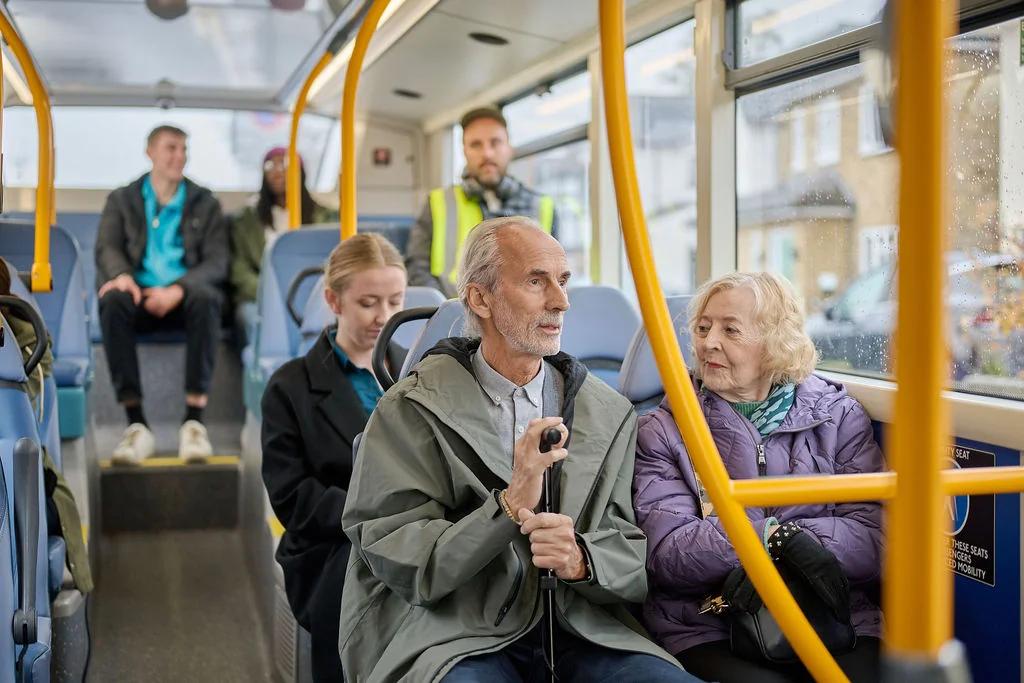
Bus commuters in Yorkshire have been named the UK's friendliest in new national research, with more than four in five saying they would happily chat with a stranger on a local journey.
The regional figures come from Arriva UK Bus's 2026 Happy to Chat survey of 1,000 UK adults, highlighting how everyday public transport across Leeds and Yorkshire creates room for warmth and community alongside local events such as Riding Lights Theatre Company's Christmas visit and the Parkinson's Steppers movement class.
Yorkshire tops the UK for friendly bus conversations
Yorkshire outperformed every other UK region across all three social-connection measures tracked in the survey:
- Open to talking: 80.6% of Yorkshire respondents said they would be open to chatting with a stranger on the bus, compared with 67.4% overall across the UK (the highest share of any region surveyed).
- Friendly conversations: 59.5% of people in Yorkshire selected friendly conversation when asked what kind of interaction they had experienced on public transport, compared with 45.6% nationally (also the highest regional figure).
- Breaking the ice: 44.4% said a smile or eye contact would make them feel more comfortable speaking to someone on public transport, compared with 36.4% overall.
Why small bus encounters lift our mood
Across the wider 1,000-adult UK sample, the survey revealed a clear gap between how disconnected people expect society to feel and what actually happens on everyday routes.
Although 66% admitted pretending to be busy to dodge small talk and 81% thought society was becoming less socially connected, 82% said a brief encounter with a stranger had lifted their mood. Two in three (67%) had experienced an act of kindness on public transport, 61% said a stranger had helped them, and 79% said they had helped another passenger.
Even more strikingly, 92% of respondents agreed that public transport plays an important role in helping older residents stay socially connected.
Neil Atherton, Social Value Coordinator at Arriva, said: "For many people, especially those travelling regularly or living alone, the bus can be one of the few shared public spaces they experience each day. For older passengers in particular, these everyday journeys can provide valuable routine and social connections.
"The Happy to Chat initiative is about encouraging those small moments of connection that can make a real difference to someone's day. Whether it's thanking the driver, helping another passenger, or simply exchanging a few words with someone during a journey, these interactions help people feel part of a community."
Practical kindness tips from the University of Sussex
To help passengers turn good intentions into easy conversation, Arriva partnered with Dr Gillian Sandstrom, Professor of the Psychology of Kindness at the University of Sussex near Brighton.
Dr Sandstrom said: "Humans have a fundamental need to belong, to feel seen and valued. When we smile at someone, give someone a compliment, or chat with someone, it helps us feel that connection we crave.
"For people who want to feel more connected, it often helps to start small. A smile, a hello, or a simple comment can open the door to connection without pressure, while looking up from your phone and noticing the people around you can create opportunities for positive interaction.
"The solution to loneliness is to build meaningful relationships, and that takes time, skills, confidence, and opportunities. When we start to think that we don't have the right skills or aren't likeable, we act as if this is the case, which tends to elicit the very response from others that we fear."
She added that public transport naturally lowers the pressure of speaking first: "A bus journey is time-restricted, so you can start a conversation and then walk away. Sitting side-by-side can feel less intimidating than face-to-face, and riding in the same place at the same time gives you something in common, however slight."
Further findings and conversation tips are published on the Arriva Happy to Chat campaign page.
Survey figures, quotes and photograph supplied by Arriva UK Bus and Dentsu.
Sources · Arriva UK Bus · Spotted an error? Corrections →
This article was produced with AI assistance. Read how we work in our editorial standards.
Frequently asked questions
What did Arriva UK Bus's Happy to Chat survey find about Yorkshire bus passengers?
Arriva UK Bus's 2026 Happy to Chat survey of 1,000 UK adults found that 80.6% of respondents in Yorkshire are open to chatting with a stranger on the bus, the highest rate in the UK compared with 67.4% nationally. In addition, 59.5% of Yorkshire passengers reported having a friendly conversation on public transport (versus 45.6% nationally) and 44.4% said a smile or eye contact helps them feel comfortable starting a chat.